

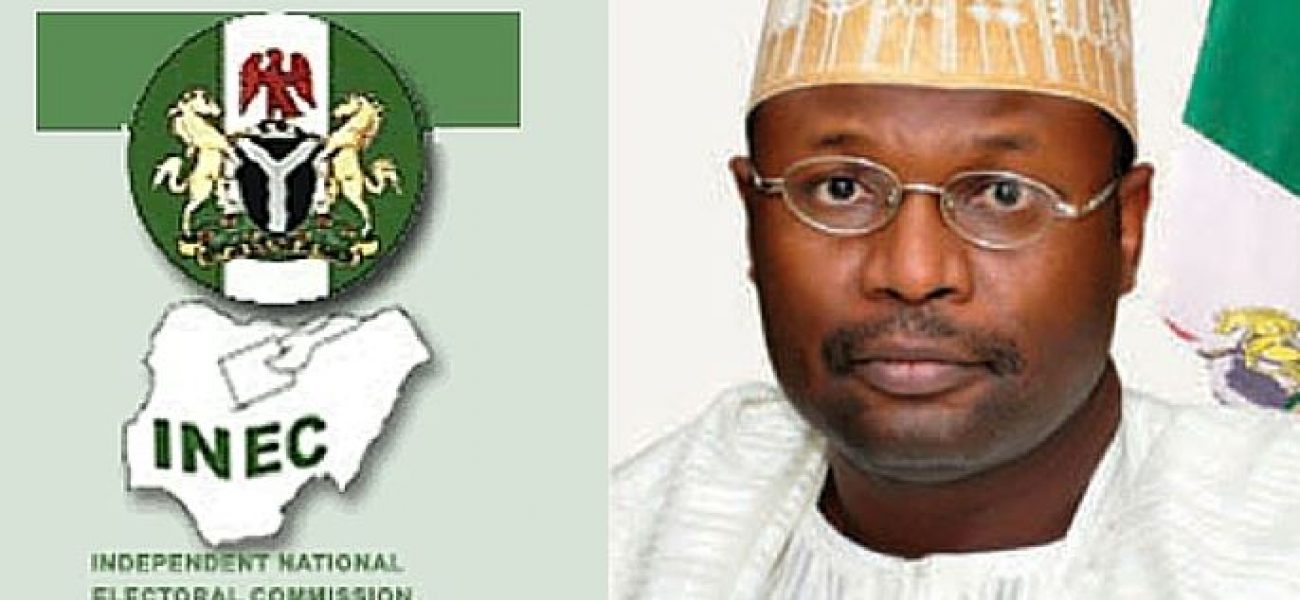
Ahead of the 2027 general elections, the Independent National Electoral Commission (INEC) has announced plans to release supplementary regulations to guide the review of declarations and returns during elections.
INEC Chairman, Prof. Mahmood Yakubu, disclosed this on Tuesday in Abuja during the second quarterly meeting with Resident Electoral Commissioners (RECs), where he also urged them to take full responsibility for their constitutional duties, emphasising that their role extends beyond the general elections.
Yakubu expressed concern over the varying interpretations of Section 65 of the Electoral Act 2022, which grants INEC the authority to review election results already declared under certain circumstances.
According to him, the commission is developing a supplement to the current Regulations and Guidelines for the Conduct of Elections (2022)to provide clearer direction on the review process.
“As we approach the bye-elections, the off-cycle governorship elections, and ultimately the 2027 General Election, the commission is concerned with the various interpretations given to the provision of Section 65 of the Electoral Act 2022 on the review of election results,” Yakubu said.
“Pursuant to our powers to issue regulations, guidelines and manuals to give effect to the provisions of the Electoral Act and for its administration, the commission is working on a supplement to the Regulations and Guidelines for the Conduct of Elections 2022 to provide clarity on the review of declaration and return at elections.
“As soon as the commission takes a decision, perhaps as early as this week, the supplementary Regulations and Guidelines will be uploaded to our website and other platforms for public information.”
The INEC chairman noted that the commission had, in the previous week, held consultative meetings with leaders of political parties, civil society organisations (CSOs), the media, and the Inter-Agency Consultative Committee on Election Security (ICCES).
Yakubu also stated that all states of the federation, including the Federal Capital Territory (FCT), now have substantive RECs in place.
He reminded the RECs that their work as election managers is full-time and must not be seasonal.
“I wish to remind you that your work does not begin as the General Election approaches. You are full-time commissioners,” he said. “There are policy and procedural issues already determined by the commission which you need to implement without prompting from the headquarters in Abuja.
“You also need to provide us with information on your plans to enhance voter access to polling units by decongesting some of them or in other areas such as the cleaning up of the voters’ register, deepening our engagement with electoral stakeholders at state and local government levels, the management of electoral logistics and election security.
“Elections and electoral activities take place in the states of the federation, and your role as managers of personnel and resources is critical to success. You can only effectively discharge your responsibilities when you are knowledgeable and committed. I encourage you to intensify your efforts so that we will play our part in what is a multi-stakeholder responsibility more effectively.”
The INEC boss said the commission had already announced dates for several elections and related activities scheduled between 16 August 2025 and 8 August 2026, during which it will conduct five major polls.
These include: bye-elections in 12 states on 16 August 2025, Anambra state governorship election on 8 November 2025, Area Council elections in the FCT on 21 February 2026, Ekiti state governorship election on 20 June 2026, and Osun State governorship election on 8 August 2026.
Yakubu noted that the timetable and schedule of activities for these elections have been released, with some already underway. He cited the commencement of political campaigns in Anambra State, the publication of the notice of election for Ekiti, and the conclusion of party primaries for the FCT Area Council elections as examples.
On voter registration, he announced that the Continuous Voter Registration (CVR) exercise will resume nationwide on 18 August 2025 for online pre-registration, while in-person registration will begin on 25 August 2025.
However, the CVR in Anambra State will next week and will be conducted simultaneously in all 326 wards of the state.
“This will enable the commission to conclude the exercise and compile the new voters’ register not later than 90 days before the date fixed for the election as provided by law. You will be updated on the implementation plan at this meeting,” Yakubu said.
He added that the detailed timetable and locations for the CVR have already been made public by the commission.
The Executive Director of Yiaga Africa and Principal Partner at the Election Law Centre, Samson Itodo, yesterday described the planned issuance of supplementary guidelines for the review of election results under Section 65 of the Electoral Act as a welcome and long-overdue development.
Speaking in an exclusive interview with Daily Trust last night, Itodo said the move aligned with Yiaga Africa’s longstanding advocacy since the 2023 general elections.
He noted that the new framework could help curb electoral malpractice and enhance transparency in Nigeria’s democratic process.
“From Yiaga Africa’s standpoint, this is a welcome development,” he said. “Since 2023, we’ve consistently called on INEC to issue detailed guidelines to operationalise Section 65 of the Electoral Act.
“Section 65 empowers the Independent National Electoral Commission (INEC) to review results declared by returning officers where such declarations were made under duress or in violation of electoral law and guidelines.
“The entire process used to be subject to discretionary decision-making,” he said. “These new guidelines are crucial because they provide clarity on timelines—specifically, the seven-day period provided in the Electoral Act—and detail who can submit reports of alleged manipulation or noncompliance.”
He, however, urged caution to ensure the guidelines are not restrictive in scope.
According to him, limiting the submission of complaints to only INEC officials could undermine accountability.
“There are cases where party agents or election observers have credible evidence of manipulation. If the guidelines only allow INEC staff to submit reports, it defeats the purpose,” he said.
He added: “We know the character of our politicians. They can compromise officials. If no report is submitted because of collusion, the Commission may never act—even when infractions have occurred.”
Itodo stressed the need for inclusive reporting mechanisms and robust safeguards.
“These guidelines are essential to breathe life into Section 65 and empower INEC to act decisively when results are tainted. But they must be inclusive, clear, and rooted in transparency,” he said.
He reaffirmed Yiaga Africa’s support for frameworks that strengthen electoral integrity and democratic accountability in Nigeria.
Section 65 amendment harmful to electoral integrity – CUPP
The Coalition of United Political Parties (CUPP), in a statement yesterday by its national secretary, Peter Ameh, opposed the INEC’s proposed amendments to the Electoral Act, particularly Section 65, describing it as potentially harmful to the country’s electoral integrity.
“We unequivocally declare that such provisions are not only unnecessary but also a deliberate attempt to entrench manipulation and undermine the will of the Nigerian people.
“Section 65 reeks of a flawed system and reveals INEC’s failure to uphold transparency and accountability.
“Instead of chasing shadows with amendments that centralize power at the national headquarters, INEC must prioritize the mandatory, immediate upload of election results to the IReV portal directly from polling units. This is the only path to ensuring every vote counts and the people’s mandate is protected,” the coalition said.
It called on the INEC to propose to the National Assembly a new framework that would allow all elections to be conducted on a single day.
“This will curb voter fatigue, eliminate apathy, and restore confidence in our democracy.
“The commission’s current trajectory only deepens public distrust and erodes the integrity of our electoral process,” the commission said.
It asked the INEC to abandon “deceptive reforms” and focus on building a transparent, credible and inclusive electoral system.
According to the coalition, Nigerians deserve an electoral process that reflects their will, not one manipulated by a select few.
“We will not stand idly by while our democracy is hijacked,” it added.
